Skin Health Biomarkers: What Vitamin D, Ferritin and B12 Do for Your Skin | ALIV
July 20, 2026

Skin is sometimes described as a window to internal health — and the clinical evidence supports this more than most dermatological conversations acknowledge. The appearance of your skin — its texture, hydration, healing rate, pigmentation evenness, and sebaceous activity — reflects the internal biochemical environment in ways that targeted blood tests can reveal. At ALIV's Pune and Mumbai clinics, a skin health blood panel often reveals deficiencies that explain skin complaints that topical treatments have failed to resolve for months or years.
Vitamin D: More Than Bone Health
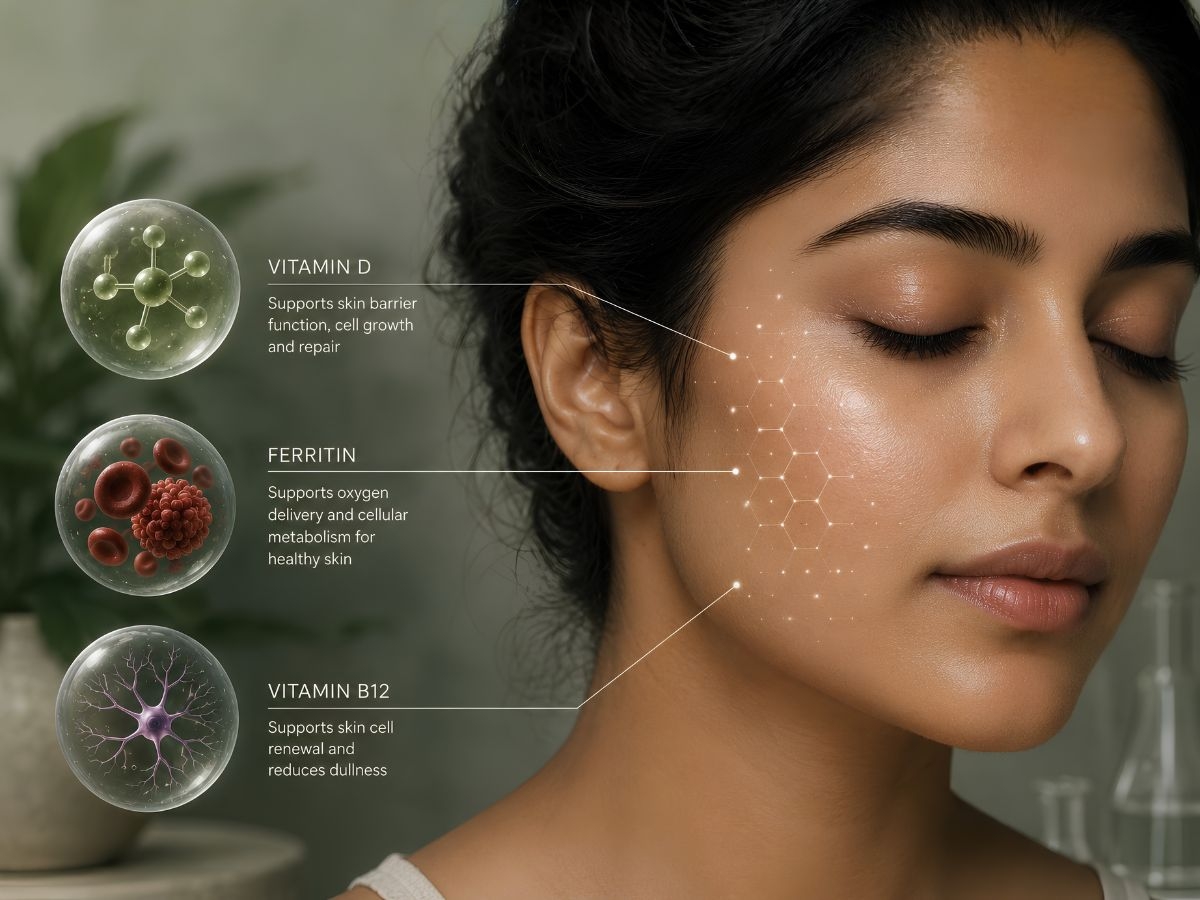
Vitamin D receptors are present throughout the skin — in keratinocytes, fibroblasts, immune cells, and melanocytes — and vitamin D signalling regulates a surprising range of skin functions. It supports the skin barrier through regulation of involucrin and filaggrin — structural proteins that maintain the outermost cornified layer. It modulates the immune response in skin, influencing the inflammatory cascade underlying acne, eczema, and psoriasis. And it influences melanocyte function in ways connected to pigmentation regulation.
Vitamin D deficiency (below 20 ng/mL) — which ICMR data suggests affects 70-100% of urban Indians in indoor occupations — is associated with increased inflammatory skin conditions, impaired wound healing, and increased susceptibility to atopic dermatitis. Testing 25-OH vitamin D is the appropriate starting point.
Ferritin: Iron's Impact on Skin
The skin needs iron for oxygen delivery to skin cells via dermal microcirculation, and as a cofactor in hydroxylation reactions producing collagen. Iron deficiency — even before frank anaemia — produces measurable effects: pallor of mucous membranes and skin, reduced healing rate, brittle nails, and hair shedding. Ferritin — not haemoglobin — is the clinically relevant marker. Haemoglobin remains normal until iron stores are substantially depleted; ferritin falls early. A ferritin below 30 ng/mL is associated with hair loss and reduced skin resilience even when haemoglobin is technically normal. Read: hair fall and fatigue — the thyroid and ferritin connection.
Vitamin B12: The Overlooked Skin Nutrient
B12 deficiency produces characteristic dermatological changes: hyperpigmentation of skin folds, palmar creases, and nail beds; angular stomatitis (cracking at corners of the mouth); and a prematurely dull skin appearance. The mechanism involves impaired DNA synthesis in rapidly-dividing skin cells and disrupted folate metabolism affecting cell turnover and repair. In India's large vegetarian population, B12 deficiency is common and often subclinical for years — but the skin shows it earlier than the nervous system. Read more: B12 deficiency and skin complexion in India.
Thyroid Function
Thyroid hormone regulates skin cell turnover, sebaceous gland activity, skin hydration, and wound healing rate. Hypothyroidism produces characteristic skin changes: dry rough coarse texture, puffiness, pallor, and hair loss. Even subclinical hypothyroidism (TSH elevated but T3/T4 technically in range) can produce early skin manifestations. Testing TSH and free T3 is part of ALIV's skin health assessment for patients whose skin complaints have a systemic quality that topical treatments have not improved.
Should I get blood tests before starting a skin IV programme?
Yes — a targeted skin health panel before any IV programme ensures the formulation addresses confirmed deficiencies rather than guessing. At ALIV, the minimum skin health panel includes: 25-OH vitamin D, ferritin, B12, thyroid function (TSH and free T3), and fasting glucose and insulin if any hormonal skin concern is present. Bringing recent blood work from another provider is equally valid — our team reviews it and identifies any gaps.
Can correcting a vitamin D deficiency alone improve skin?
For patients with significant vitamin D deficiency contributing to inflammatory skin conditions or impaired barrier function, correction typically produces observable improvement in skin reactivity, dryness, and healing rate over two to three months. The improvement is gradual — skin cell turnover is approximately 28 days, and full skin renewal after nutritional correction takes two to three turnover cycles.
Why does skin look worse when stressed even though diet has not changed?
Cortisol elevation from stress produces direct skin effects independent of nutrition: it increases sebum production, degrades collagen through MMP activation, impairs the skin barrier by reducing ceramide production, and slows wound healing through immune modulation. These are direct hormonal mechanisms — not mediated through dietary changes — which is why skin deteriorates during sustained stress periods even in people eating well. Nutritional support helps the skin withstand cortisol's effects; it does not override them.
Does zinc show up on standard blood tests?
Serum zinc is included in some but not all standard wellness panels. Zinc deficiency is associated with poor wound healing, acne, and impaired skin barrier function. For patients with recurrent skin infections, slow-healing wounds, or acne that has not responded to standard management, serum zinc is a worthwhile addition to the skin health blood panel.
How often should I repeat skin health blood tests?
After an initial comprehensive panel and a course of IV therapy, the key markers — ferritin, B12, vitamin D — should be reassessed at three to four months to confirm response. Patients on ongoing long-term maintenance programmes benefit from a full skin health panel every six months to confirm levels remain in appropriate ranges and no new imbalances have developed.