Dark Circles That Don't Go Away: Anaemia, Sleep and Skin | ALIV
June 28, 2026

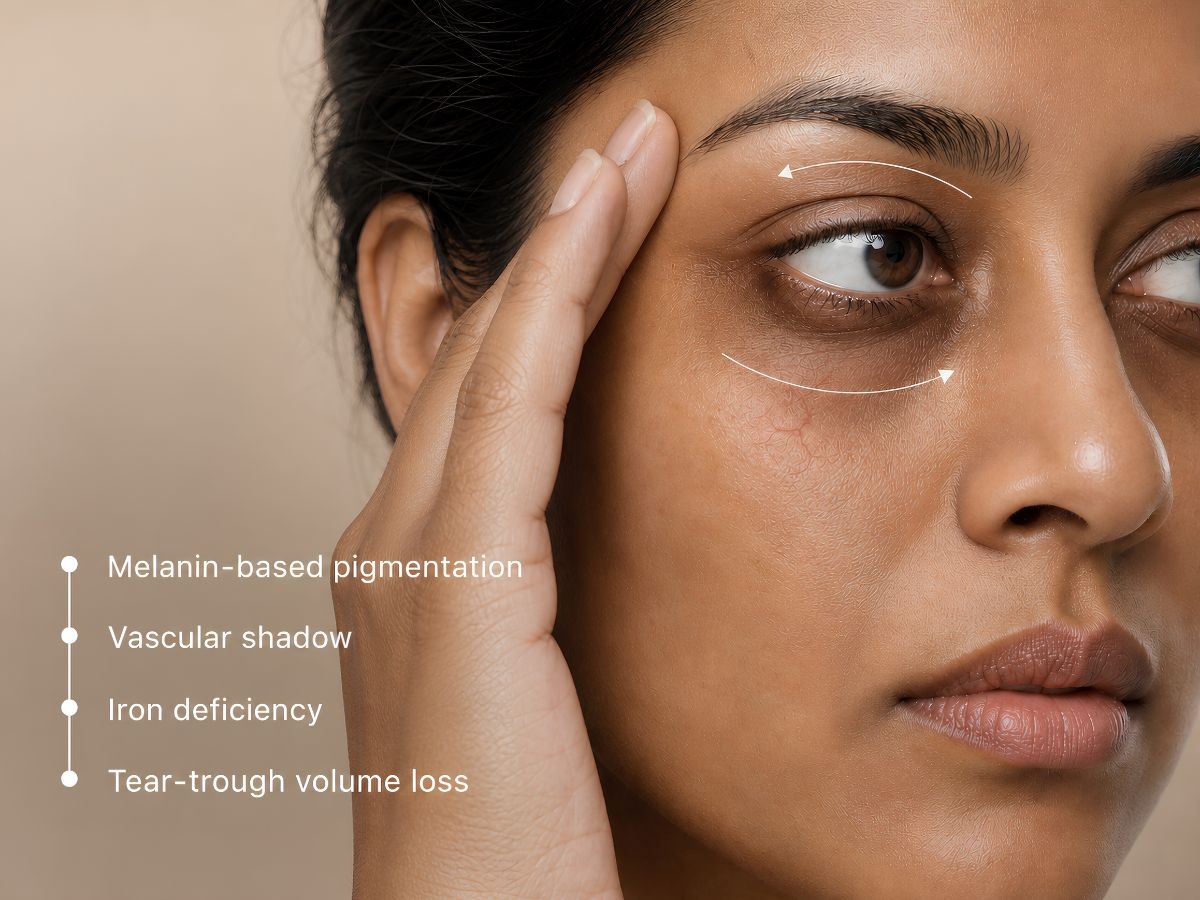
Dark circles are one of the most common skin complaints across ALIV's Pune and Mumbai patient base — and one of the most frequently misunderstood. The instinctive explanation — "it's from not sleeping enough" — is sometimes correct but far from complete. Under-eye darkening has at least four distinct biological causes, each requiring a different clinical approach. Applying an eye cream to a dark circle caused by iron deficiency is the same category of clinical mismatch as taking magnesium for a B12 headache.
Cause 1: Periorbital Pigmentation (Melanin-Based)
True periorbital hyperpigmentation — excess melanin in the periorbital skin — is the most common cause of dark circles in South Asian populations and is significantly influenced by genetics. The skin around the eye is the thinnest on the body (0.5mm versus 2mm elsewhere), and in darker Fitzpatrick skin types, melanocytes in this area tend to be hyperactive. This type responds to antioxidant and melanin-inhibiting approaches — topical vitamin C and niacinamide targeting the periorbital area; IV glutathione and vitamin C for systemic melanin modulation. It responds slowly and requires consistent sustained treatment. SPF in the periorbital area is particularly important. See: understanding different pigmentation types.
Cause 2: Vascular (Blue-Purple Shadow)
The blue-purple shadow visible under the lower eyelid is caused by the underlying vasculature showing through thin periorbital skin. This is structural — the orbital vein is visible through skin with minimal subcutaneous fat to conceal it. It is worsened by anything that dilates blood vessels (fatigue, alcohol, allergens) and improved by anything reducing vascular congestion. Iron deficiency anaemia — by reducing oxygen-carrying capacity of red blood cells — contributes to the bluish haemoglobin-deficient colour visible through this thin skin. Read: chronic fatigue and how to assess iron status.
Cause 3: Iron Deficiency — The Most Under-Diagnosed Driver
Ferritin — the storage form of iron — falls before haemoglobin and before the anaemia threshold is reached. Patients with ferritin below 20 ng/mL frequently present with dark circles, hair loss, fatigue, and reduced exercise tolerance, even without a formal anaemia diagnosis. The connection operates through vascular pallor and low-oxygen colouration visible through periorbital skin, and through generalised pallor that makes relative darkness of the periorbital area more visually prominent by contrast.
Correcting iron deficiency — through IV iron where oral supplementation has been insufficient, or through oral iron in appropriate bioavailable forms — often produces visible improvement in dark circles that no topical eye cream achieves. Getting a ferritin level tested before attributing dark circles purely to lack of sleep is the practical clinical suggestion. See: which tests personalise IV therapy.
Cause 4: Structural — Tear Troughs and Volume Loss
The tear trough deepens with age as the fat pad under the eye atrophies and the skin loses collagen. The resulting hollow casts a shadow regardless of pigmentation or vascular status. This is structural — it responds to hyaluronic acid filler or fat transfer, not glutathione IVs or eye creams. Understanding this distinction prevents patients from spending significantly on pigmentation treatment for a problem that is anatomical in origin.
How do I know if my dark circles are from iron deficiency?
Clinical clues: dark circles coexist with fatigue, hair loss, poor exercise tolerance, or breathlessness on exertion. They are present regardless of how much you sleep. They have a blue or pale grey tinge rather than brown. A ferritin blood test confirms the diagnosis — and if ferritin is below 20 ng/mL, iron repletion is the appropriate first intervention before any aesthetic treatment.
Do eye creams actually help dark circles?
For melanin-based periorbital pigmentation: topical vitamin C, niacinamide, retinol, and caffeine can produce modest maintained improvement. For structural dark circles from tear trough hollowing: no topical product addresses the underlying anatomy. For iron deficiency or sleep-driven circles: eye cream is irrelevant to the mechanism. Identifying the type determines the right treatment.
Can allergies cause dark circles?
Yes — allergic rhinitis causes nasal congestion that impairs venous drainage from the periorbital area, pooling blood in the lower lid veins and darkening their appearance. Habitual eye rubbing in allergy sufferers also traumatises the periorbital skin and stimulates melanocyte activity. Managing the underlying allergy is the correct clinical approach for allergy-driven dark circles.
My dark circles worsened significantly after COVID. Is this connected?
Post-COVID ferritin depletion is documented — COVID-19 drives significant iron utilisation as part of the immune and inflammatory response, and many patients emerge with ferritin significantly below pre-illness baseline. Combined with post-COVID fatigue and disrupted sleep, this can produce noticeably worsened dark circles. A ferritin and B12 blood test is the appropriate starting investigation.
Does staying up late worsen dark circles permanently?
Chronic sleep deprivation worsens vascular dark circles — it increases skin pallor and periorbital vascular congestion. It does not permanently increase melanin deposition. Catching up on sleep typically improves sleep-related dark circles relatively quickly. For patients with underlying pigmentation-based circles, sleep deprivation adds a vascular component on top of the existing pigmentation — both need addressing for optimal improvement.