Acne After 25: Why It Keeps Coming Back and the Gut-Hormone-Stress Triangle | ALIV
June 24, 2026

Adult-onset acne — acne that begins or persists significantly beyond the teenage years — is one of the fastest-growing dermatological concerns in India's urban population. Women in their 30s and 40s present with acne they have never fully been free of, or acne that resolved in their 20s and returned with force in their mid-30s. The underlying biology of adult acne is meaningfully different from adolescent acne, which is why the same benzoyl peroxide face wash that worked at 17 does nothing at 34.
Why Adult Acne Is Different
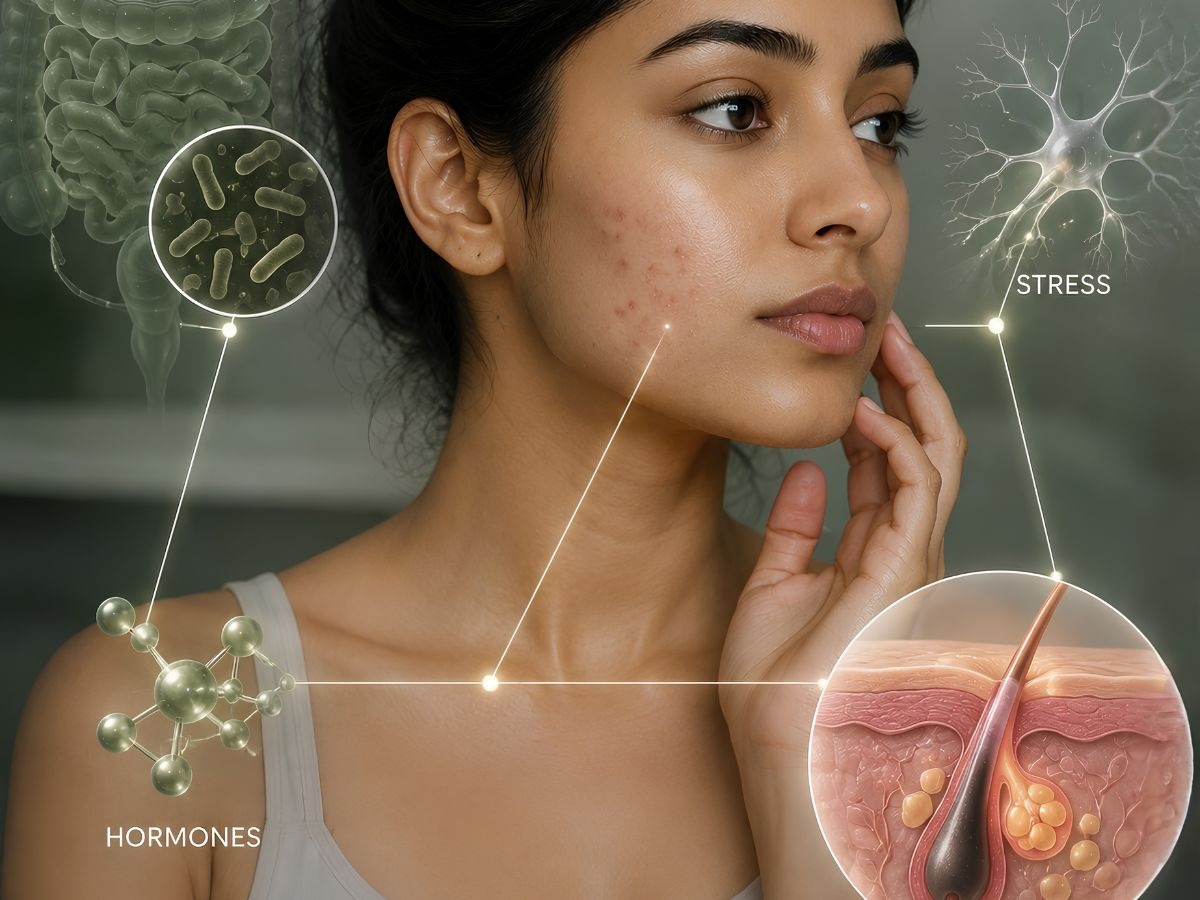
Adolescent acne is primarily driven by the androgen surge at puberty increasing sebum production — typically distributed on the T-zone and tending to resolve as androgen levels stabilise. Adult acne clusters on the lower face — the jaw, chin, and neck — and is predominantly driven by three interacting systems: hormonal dysregulation (typically androgens relative to oestrogen), gut microbiome disruption, and the HPA-axis stress response. These three systems interact continuously, which is why adult acne in urban professionals is so persistently refractory — the lifestyle factors driving all three triggers rarely resolve spontaneously.
The Hormonal Driver: Androgens and PCOS
The most common hormonal driver of adult female acne is relative androgen excess — testosterone and DHT ratios high relative to oestrogen — stimulating sebaceous glands to produce more sebum than the skin can clear. PCOS is the most common endocrine cause of this pattern and is significantly under-diagnosed — many women with PCOS-related acne have been treated for years with topical antibiotics and retinoids without anyone investigating the hormonal driver. If your acne is predominantly jaw and chin, often worse around your period, accompanied by irregular periods, excess hair growth, or weight difficulty — a hormonal workup is clinically warranted. See: PCOS clinical guide.
The Gut Driver: The Skin-Gut Axis
The gut microbiome influences skin health through systemic inflammation, hormonal metabolism, and the gut-brain-skin axis. Dysbiosis from processed food diets, antibiotic use, chronic stress, or alcohol consumption produces low-grade systemic inflammation that manifests in skin. The mechanism includes: increased intestinal permeability allowing bacterial products to trigger inflammatory responses that prime sebaceous glands; altered androgen metabolism in the gut; and micronutrient absorption changes affecting skin barrier function. Patients with adult acne and significant gut symptoms often see skin improvement when gut health is addressed — reinforcing the skin-gut connection as clinically real.
The Stress Driver: Cortisol and Sebum
Psychological stress activates the HPA axis, triggering cortisol release that directly stimulates sebaceous gland activity. Chronic stress produces chronic cortisol elevation, producing chronic sebum overproduction. In urban professionals — where sustained work pressure, commute stress, and disrupted sleep create background cortisol activation — this is a meaningful and persistent acne driver that topical products address only superficially.
Why does acne flare the week before my period?
In the late luteal phase, progesterone rises and oestrogen falls. This relative androgenic shift stimulates sebaceous gland activity in the week before menstruation. For women with underlying androgen sensitivity or PCOS, this premenstrual flare is pronounced and predictable. Oral contraceptives with anti-androgenic progestins (such as drospirenone) are often used clinically to reduce this cyclical flare — a hormonal approach, not a topical one.
Does diet affect adult acne?
Yes — with a specific evidence base. High-glycaemic foods (refined carbohydrates, sugary beverages, processed snacks) produce insulin spikes that increase IGF-1, which stimulates sebaceous gland activity and androgen production in skin. Dairy — particularly skimmed milk — is independently associated with acne in some populations. A lower-glycaemic diet reduces acne severity in multiple randomised controlled trials. Dietary modification is a clinically supported part of adult acne management.
Can IV therapy help adult acne?
IV therapy can support the metabolic and hormonal context of adult acne: zinc at IV-therapeutic doses has anti-inflammatory and sebum-regulating properties; B vitamins support adrenal function and cortisol regulation; IV glutathione and vitamin C reduce the oxidative inflammatory environment promoting acne pathology. The PCOS Balancer IV at ALIV is particularly relevant for hormonally-driven adult acne. IV therapy is most effective as part of a comprehensive approach that also addresses diet, gut health, hormonal assessment, and stress.
Why does antibiotic-treated acne keep returning?
Antibiotics reduce C. acnes — the bacteria involved in inflammatory acne — but do not address the sebaceous gland overactivity, hormonal trigger, or gut disruption that creates the acne environment. When antibiotics are stopped, the bacterial population recovers in the same unchanged environment. Extended antibiotic use also disrupts the gut microbiome in ways that can paradoxically worsen the gut-skin axis dysfunction driving adult acne. Long-term antibiotics without addressing the underlying hormonal or gut driver is not the appropriate long-term management strategy.
Is adult female acne always related to PCOS?
No — but PCOS is significantly under-diagnosed as an acne driver. A hormonal panel (LH, FSH, testosterone, DHEA-S, fasting insulin) is worthwhile for any woman with persistent adult acne and one or more additional PCOS features (irregular periods, excess hair growth, weight difficulty, or family history of PCOS or diabetes). Not all adult female acne is hormonal — but the hormonal workup should not be skipped before committing to years of topical-only management